



A.P. Moller-Maersk raised its financial guidance for 2026 on Monday, June 29, 2026. The Danish container line now expects underlying EBITDA of $8 billion to $10 billion for the full year, up from the $4.5 billion to $7 billion it had guided before. Its forecast for underlying EBIT moved to a profit of $2 billion to $4 billion, from a previous range that ran from a $1.5 billion loss to a $1 billion profit.
The company gave two reasons in its announcement: continued strong demand in the container market, particularly in the Far East, and what it called “a recent sustained increase in spot market rates.” Maersk also raised its view of the market as a whole. It now expects global container volumes to grow by about 4% in 2026, the top of its earlier 2% to 4% range. The guidance for free cash flow improved to at least minus $1.5 billion, from at least minus $3 billion.
gCaptain noted that container shipping has benefited from an extended period of supply chain disruption that has kept freight rates elevated. According to the same report, Maersk is still running contingency measures in the Middle East, including restricted bookings to several Gulf markets, rerouting of cargo through alternative hubs and inland corridors, and emergency freight surcharges. The company said it will publish its full second-quarter results on August 13.
What it means for shippers
- A carrier is telling you rates have stayed up. An earnings upgrade of this size is built on the freight rates shippers are paying. When one of the largest carriers bases its forecast on sustained spot rates and firm demand, it is reasonable to budget for a tight market through the summer rather than a quick return to spring price levels.
- Space matters as much as price. Demand growth at the top of the forecast range means fuller ships out of Asia. Give your forwarder booking forecasts earlier, and ask how far ahead space is currently being confirmed on your lanes.
- Read surcharges separately. Emergency surcharges tied to the Middle East situation are set by each carrier and can change at short notice. Ask for them to be itemized on every quote.
- Use the next data point. Quarterly results in mid-August will show how much of the rate increase carriers have kept. That is a useful marker if you are negotiating contract rates or deciding how much volume to leave on the spot market.
- Protect delivery dates. Rerouted cargo and full vessels both add uncertainty to arrival dates. Build a buffer into inventory plans and keep your trucker informed of changed arrival times.
Go Trucking Services handles ocean freight for importers and exporters. See our ocean freight service or request a quote on the home page. Rates and surcharges for a specific shipment should be confirmed with your carrier or forwarder.
Sources:
- A.P. Moller-Maersk company announcement (via Inderes): Upgrade of guidance for full year 2026
- gCaptain: Maersk Raises 2026 Earnings Outlook as Container Market Strength Continues
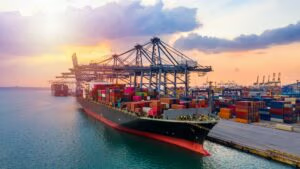
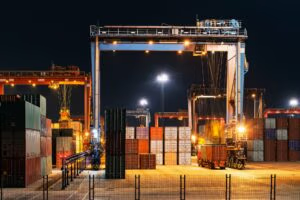
Image: Alfvanbeem, via Wikimedia Commons (CC0).