


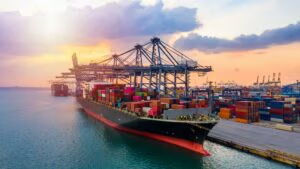

Container lines’ return to the Suez Canal gathered pace in mid-September 2026. On Monday, September 14, Maersk and Hapag-Lloyd said four more services in their Gemini Cooperation network, AE5, AE11, AE12 and ME2, will shift from the Cape of Good Hope back to the Red Sea and Suez Canal. On Wednesday, September 16, the 24,188-TEU OOCL Portugal passed through the canal on a voyage from Belgium to China, which the Suez Canal Authority described as COSCO Shipping Lines’ first southbound passage since the Red Sea security crisis began.
The four Gemini services join two others, AE15 and AE19, that already use the canal. AE5 links Asia with North Europe, AE11 and AE12 link Asia with the Mediterranean, and ME2 connects India with Europe. The Suez Canal Authority said container ship net tonnage through the canal reached 72.1 million tons in the first eight months of 2026, up 54.2% from 46.7 million tons a year earlier, and that services run by CMA CGM, Maersk, MSC, Hapag-Lloyd and COSCO have all returned to varying degrees.
The shorter route makes a large difference. gCaptain noted that sailing through Suez removes thousands of miles from an Asia-Europe voyage compared with going around southern Africa, cutting transit times, fuel consumption and the number of vessels a service needs. Tradlinx, citing Xeneta data, put the average Yantian to Rotterdam transit at 41 days via the Cape against 27 days on a Suez sailing. The return is not unconditional. According to Reuters, the two carriers said they will keep monitoring the situation in the Middle East very closely and that the changes depend on there being no escalation of conflict in the region. gCaptain reported that fighting around the southern entrance to the Red Sea has recently been moving in the opposite direction.
What it means for shippers
- It matters beyond Europe. These are Asia-Europe and India-Europe services, but shorter voyages mean each service needs fewer ships. Vessels released from long Cape routings add to available capacity, which over time tends to work against high freight rates. There is no fixed timeline for that, and transpacific rates follow their own supply and demand.
- Ask whether your service is changing. If you ship between the U.S. East Coast and India, the Middle East or the Mediterranean, check with your carrier or forwarder whether the routing and published transit time of your service are being revised.
- Earlier arrivals need planning too. Tradlinx points out that ships arriving up to two weeks sooner than planned can bunch at discharge ports and start free time earlier than expected. The same applies to any service that switches route, so keep trucking appointments and warehouse receiving flexible during the changeover.
- Keep a buffer. The carriers have made the return conditional on security. A reversal would put the extra sailing days back, so avoid cutting safety stock on the assumption that the shorter transit is permanent.
- Check surcharges and cover. Ask your carrier which routing-related surcharges apply to your booking, and confirm with your cargo insurer how Red Sea transits are treated under your policy.
Go Trucking Services handles ocean freight for importers and exporters. See our ocean freight service or request a quote on the home page.
Sources:
- gCaptain: Container Shipping Returns to Suez Despite Rising Red Sea Risks
- Reuters via Global Banking and Finance Review: Maersk, Hapag-Lloyd resume services through Suez Canal
- Tradlinx: Maersk and Hapag-Lloyd move four more Gemini services back through Suez
Image: Vyacheslav Argenberg, via Wikimedia Commons (CC BY 2.0).